
Outdoor condenser siting, brackets and Class 2(d) rules
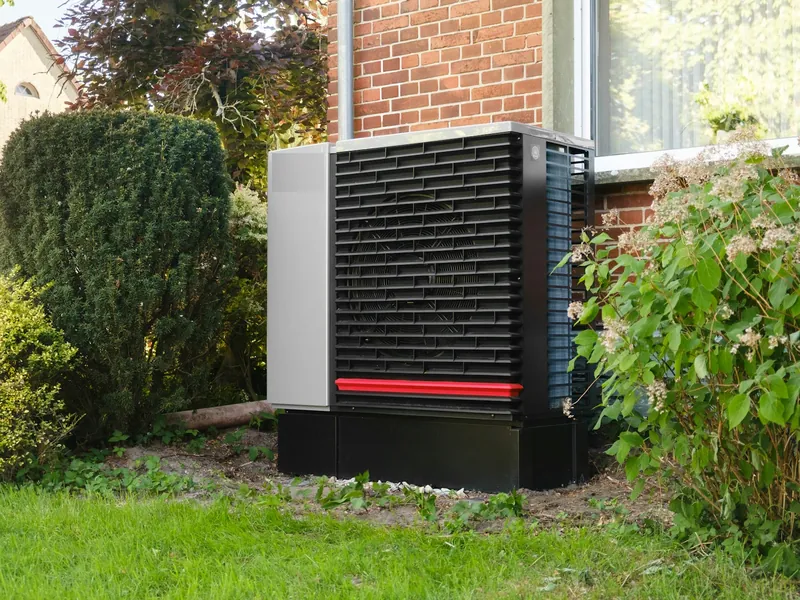
For houses in Ireland, outdoor air-source condenser units fall under Class 2(d) of the Planning and Development Regulations as amended by S.I. No. 342 of 2026. The unit is normally exempt from planning permission when noise does not exceed 43 dB(A) (or 5 dB(A) above background) at the nearest neighbouring dwelling, aggregate area stays within 2.5 m², and the unit sits at least 50 cm from a wall or roof edge without encroaching on a public road. Apartments and commercial units do not share the domestic Class 2(d) exemption.
Irish planning exemptions under S.I. 342/2026, staying below 43 dB(A) at your neighbour's wall and eliminating bracket vibration.
Free, no obligation. One local installer prices it, not five.
- 43 dB(A)Class 2(d) max at neighbour wall
- 2.5 m²aggregate outdoor unit area cap
- 50 cmmin clearance from wall/roof edge
- €80 / 4 wksSection 5 council check
Irish Class 2(d) exemption rules under S.I. No. 342 of 2026
Because modern reversible split air conditioners operate as air-to-air heat pumps, residential houses in Ireland fall under Class 2(d) of Part 1, Schedule 2 of the Planning and Development Regulations (S.I. No. 600 of 2001), updated by S.I. No. 342 of 2026 (effective 27 July 2026).
- 43 dB(A) neighbour noise ceiling. During normal operation, sound must not exceed 43 dB(A), or 5 dB(A) above background noise (whichever is greater), measured at the nearest neighbouring inhabited dwelling.
- 2.5 m² aggregate structure limit. The combined footprint/area of all heat pump or outdoor AC units on the house must stay within 2.5 m².
- 50 cm minimum edge setback. Wall- or roof-mounted units must sit at least 50 cm from any edge of the wall or roof.
- Front-of-house update (July 2026). S.I. No. 342 of 2026 lifted the old blanket ban on front-wall mounting for houses, provided the condenser does not encroach onto a public road. Protected Structures, Architectural Conservation Areas (ACAs) and restrictive estate conditions still override exemptions.
Price my AC
Four quick taps and our price shows before we ask for a phone number. One local F-Gas installer rings you, not five.
Single-room wall split AC, 1 room, back-to-back outer wall: €1,400 to €2,300, supplied and fitted.
How the price is worked out
The range reflects going Irish supply-and-fit rates for R32 inverter split, multi-split, commercial cassette and concealed ducted systems, including indoor and outdoor units, standard copper pipework, trunking, core drilling, vacuum pressure test and EPA F-Gas commissioning. Extended runs through attics or internal rooms, whisper condensate pumps and dedicated RECI electrical spurs with weatherproof rotary isolators adjust the figure. Ask whether VAT applies at 13.5% or 23% under Revenue's two-thirds rule. Only an F-Gas installer who surveys your rooms gives a firm written quote.
Siting scenarios compared across Irish property types
Detached, semi-detached or terraced house
- Planning position
- Normally exempt under Class 2(d)
- Practical siting step
- Site on rear or side wall with anti-vibration pads; verify 43 dB(A) boundary distance.
Protected Structure or ACA home
- Planning position
- Exemption does not apply
- Practical siting step
- Consult local authority conservation officer before fixing anything externally.
Apartment or duplex block
- Planning position
- Not covered by Class 2(d)
- Practical siting step
- Obtain Owners' Management Company written consent and confirm planning requirement.
Commercial office, shop or clinic
- Planning position
- Not covered by domestic Class 2(d)
- Practical siting step
- Check planning status and acoustic attenuation when near residential neighbours.
Stopping wall vibration and rattle
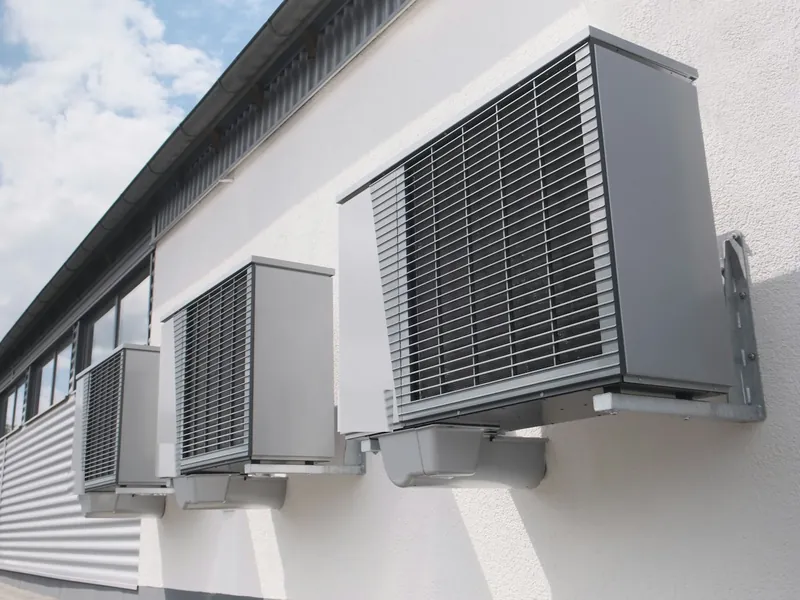
- Ground feet beat wall brackets on hollow block or timber frame. Setting the condenser on heavy rubber isolation feet atop concrete slabs or compacted gravel stops low-frequency compressor hum resonating through bedroom walls.
- Use rubber anti-vibration dampers on masonry brackets. Where narrow side passages require wall-mounted brackets, insert EPDM isolation mounts between the bracket arm and condenser base.
- Keep airflow clear front and rear. Leave 150 mm behind the coil and at least 600 mm unobstructed in front of the fan grille so discharged air never short-circuits.
- Section 5 declaration for certainty. Paying €80 to your county or city council gives a binding written ruling within 4 weeks on whether your proposed condenser location is exempt.
Further AC reading
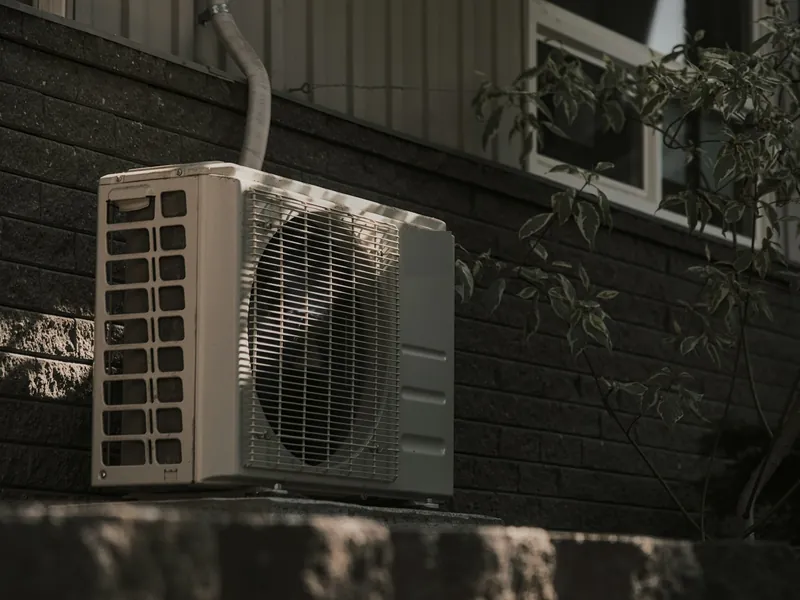 F-Gas & EPA legal rulesEU 2024/573 certification, EPA compliance and why DIY split fitting is illegal.
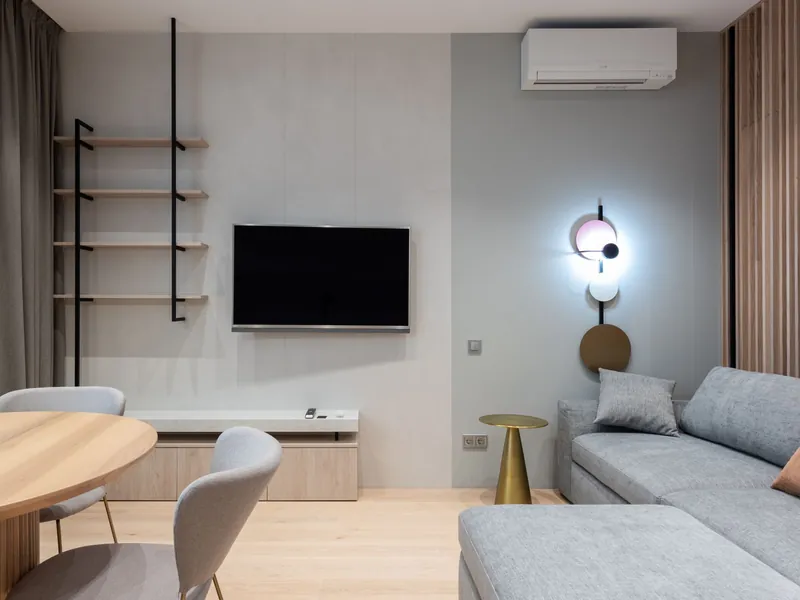 Multi-split home ACOne outdoor condenser serving 2 to 4 rooms with separate controls.
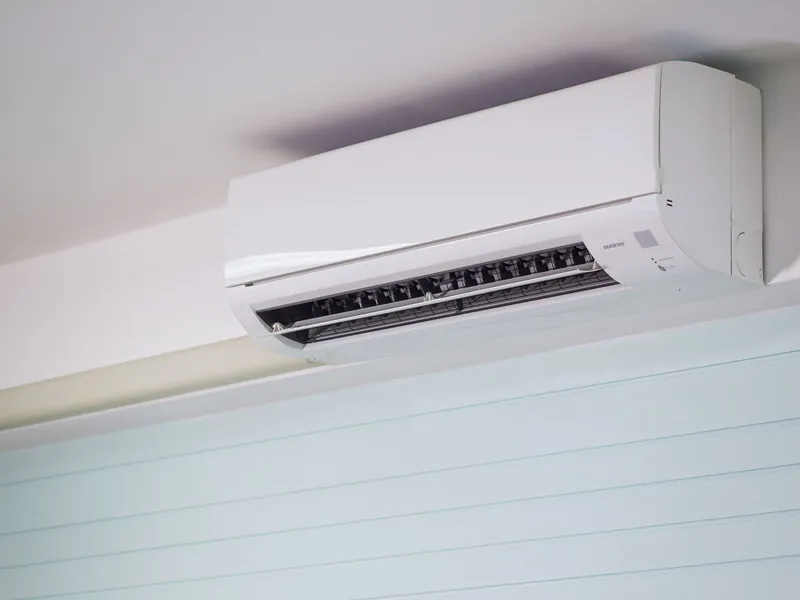 Single-room split AC2.5 to 5.0 kW wall-mounted inverter splits for bedrooms and lounges.
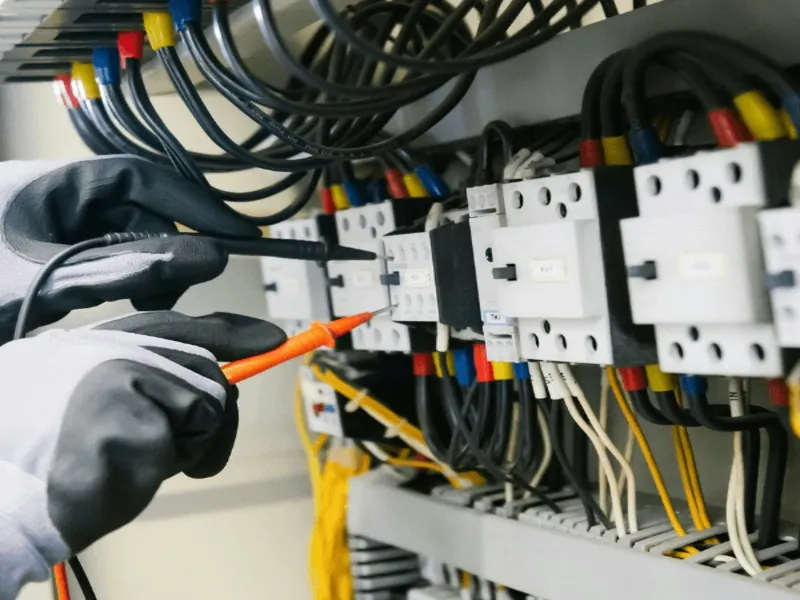 Condensate & electricsGravity drainage vs whisper pumps, fused spurs and RECI rotary isolators.
 AC installation DublinTerraced and A-rated homes, 4 Dublin councils and coastal coil care.
 AC installation CorkCork city, harbour salt protection, rural spreads and local installers.
Answers before you book a survey
How loud is a modern outdoor AC condenser unit?
Typical residential 2.5 to 3.5 kW inverter condensers measure 45 to 49 dB(A) at 1 metre on full load, dropping below 40 dB(A) by 3 to 4 metres distance and lower still on night quiet mode.
Can I put an outdoor AC unit on the front wall of my house?
Under S.I. No. 342 of 2026 (effective July 2026), the national blanket ban on front-wall heat pump/AC placement for houses was removed provided it does not encroach onto a public road, though ACAs, Protected Structures and original estate planning conditions still apply.
Should I put a wooden decorative box around the outdoor unit?
Only use slatted acoustic enclosures specifically engineered with open airflow clearance for condensers. Tight timber covers choke airflow, spike electricity use and overheat the compressor.
What if I live in a mid-terrace house with narrow side access?
Most mid-terrace installers site the condenser on the rear garden wall or low concrete plinth beside the back door, running insulated copper lines up one neat white trunking channel.
Every AC system, guide and county page
AC system types
Costs, sizing & rules
Check your room price before booking a survey
Pick the AC setup, room count and pipe run access. When you want a written site quote, your outline goes to a single F-Gas certified installer in your county.